Che cosa sta cercando?

Gli impianti di scarico generano livelli di rumore estremamente elevati a causa della rapida espansione dei gas e degli impulsi di pressione che escono dal motore. Guarnizione del silenziatore di scarico è un materiale fonoassorbente installato all'interno di una marmitta per controllare il rumore, gestire il calore e modellare il tono dello scarico senza bloccare il flusso d'aria.
A differenza delle parti meccaniche che eliminano il rumore, la guarnizione del silenziatore funziona tramite assorbimento acustico , non una restrizione. Capire come funziona aiuta a spiegare perché la scelta dei materiali, la qualità dell'installazione e la manutenzione sono tutti fattori importanti.
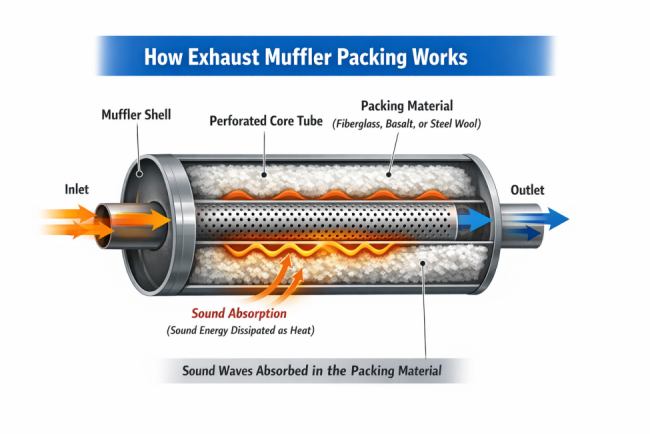
Per capire come funziona la guarnizione del silenziatore di scarico, è utile osservare la struttura interna di un tipico silenziatore:
Un guscio esterno del silenziatore
UN tubo con nucleo perforato
Materiale di imballaggio del silenziatore di scarico avvolto o imballato attorno al nucleo
Flusso dei gas di scarico attraverso il nucleo perforato , non direttamente attraverso l'imballaggio stesso. Questa progettazione consente all'energia sonora di interagire con il materiale di imballaggio mantenendo il flusso di scarico.
Quando i gas di scarico attraversano il nucleo perforato, le onde sonore fuoriescono dai piccoli fori e penetrano nella guarnizione del silenziatore circostante. All'interno del materiale di guarnizione:
Le onde sonore perdono energia attraverso la vibrazione delle fibre
Il calore viene generato quando l'energia sonora si dissipa
Il rumore riflesso viene ridotto prima di uscire dalla marmitta
Questo processo riduce il rumore complessivo dello scarico senza limitare le prestazioni del motore .
L'efficacia dell'imballaggio del silenziatore di scarico dipende fortemente da densità :
Troppo lento: Il suono passa con un assorbimento minimo
Troppo stretto: Il flusso di scarico potrebbe essere limitato e la qualità del suono potrebbe peggiorare
Densità corretta: Equilibrio ottimale tra assorbimento acustico e flusso d'aria
Ecco perché i sistemi di scarico professionali controllano attentamente la compressione delle guarnizioni durante la produzione.
La guarnizione del silenziatore di scarico non solo rende lo scarico più silenzioso, ma influisce anche carattere sonoro .
Fibre più morbide → tono più liscio e profondo
Imballaggio più denso → suono più stretto e controllato
Imballaggio degradato → rumore metallico acuto
Con l'usura delle guarnizioni, le onde sonore si riflettono più direttamente sulle superfici metalliche, il che spiega perché le vecchie marmitte producono un suono più forte e stridente.
La guarnizione del silenziatore di scarico opera in ambienti con temperature estremamente elevate. Il calore influisce sulle prestazioni in due modi:
Isolamento termico – L’imballaggio aiuta a proteggere il guscio della marmitta dal calore diretto dello scarico
Stabilità del materiale – L’esposizione prolungata al calore scompone gradualmente le fibre
Con il deterioramento delle fibre, l'efficienza di assorbimento acustico diminuisce, anche se il silenziatore appare intatto dall'esterno.
Un errore comune è pensare che la guarnizione del silenziatore limiti il flusso di scarico. In realtà:
I gas di scarico rimangono all'interno del nucleo perforato
L'imballaggio assorbe il suono, non il volume del gas
I sistemi progettati correttamente mantengono l'efficienza del motore
Solo una densità di imballaggio non corretta o un'installazione scorretta possono causare problemi di flusso.
Con il deterioramento della guarnizione del silenziatore di scarico:
L'efficienza di assorbimento acustico diminuisce
Lo scarico diventa più rumoroso e più acuto
I componenti interni potrebbero essere esposti a calore eccessivo
Il guasto dell'imballaggio è solitamente graduale , non improvviso, ed è per questo che il cambiamento del suono è il primo segnale d'allarme.
| Caratteristica | Marmitta imballata | Marmitta non imballata |
|---|---|---|
| Controllo del rumore | Assorbente | Riflettente |
| Qualità del suono | Liscio e controllato | Tono più acuto |
| Manutenzione | Richiede una sostituzione periodica | Minimo |
| Impatto sulle prestazioni | Minimo | Minimo |
I silenziatori imballati sono ampiamente utilizzati nelle motociclette e nei sistemi di scarico ad alte prestazioni a causa della loro flessibilità di messa a punto del suono .
Per acquirenti, ingegneri e clienti OEM, comprendere il funzionamento della guarnizione del silenziatore di scarico aiuta a:
Selezione del materiale giusto
Stabilire aspettative realistiche sulla durata della vita
Diagnosticare correttamente i problemi di rumore
Evitare la sostituzione non necessaria della marmitta
Spiega anche perché un imballaggio scadente o mal installato spesso porta a risultati deludenti.
No. Se installato correttamente, assorbe il suono senza limitare il flusso di scarico.
Le fibre di imballaggio si degradano gradualmente a causa del calore e delle vibrazioni, riducendo l'assorbimento acustico.
No. Riduce il rumore ma non elimina completamente il suono dello scarico.
No. Alcuni silenziatori si basano su design a camera anziché su guarnizioni.
Nel suo nucleo, guarnizione del silenziatore di scarico funziona assorbendo l'energia sonora , senza bloccare i gas di scarico. Convertendo le onde sonore in calore all'interno di materiali fibrosi, riduce il rumore, modella il tono dello scarico e protegge i componenti della marmitta dallo stress termico.
La comprensione di questo principio è fondamentale per scegliere i materiali, diagnosticare i problemi e manutenere efficacemente i sistemi di scarico.

No.10, Chuangxin North Road, Nanshan Park, Ningguo Economic and Technological Development Zone, Ningguo City, Anhui Province, China
tel/Whatsapp : 0086-15856303740
e-mail : sales@bstbraidedsleeve.com
Skype : vanesa-cheng