Che cosa sta cercando?
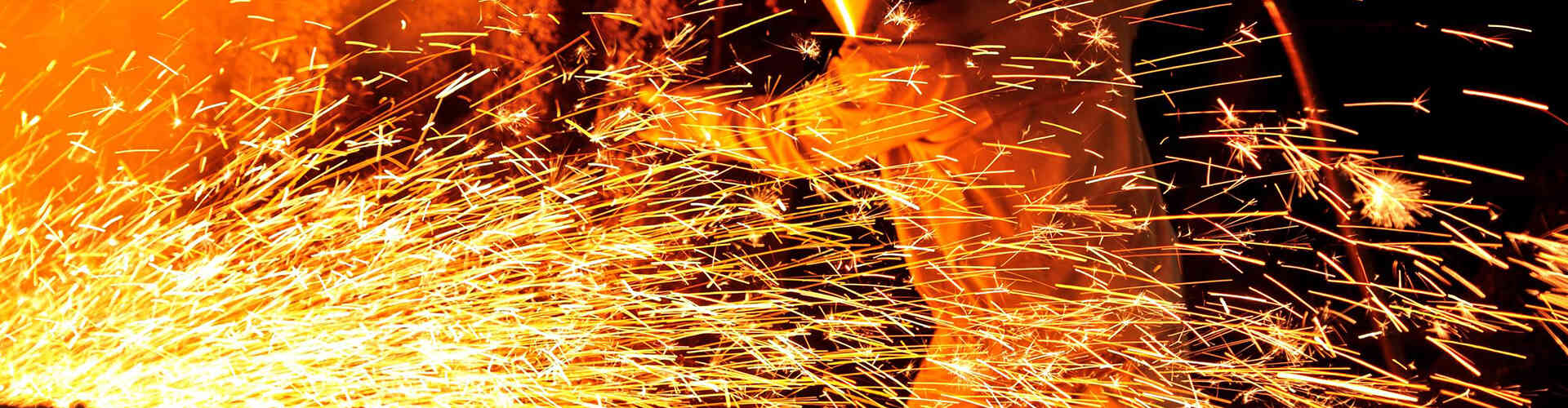
Uno scudo termico adesivo "peel and stick" è una barriera termica flessibile con un supporto adesivo sensibile alla pressione che consente al materiale di essere incollato direttamente su un pannello o un'altra superficie idonea. Nelle applicazioni automobilistiche, questa struttura viene comunemente utilizzata laddove componenti di scarico, turbocompressori, convertitori catalitici, sistemi di trasmissione o altri componenti caldi creano calore radiante vicino alla carrozzeria del veicolo o ad apparecchiature sensibili.
La comodità di un supporto adesivo non significa che ogni scudo termico autoadesivo possa essere installato in ogni posizione calda. La superficie riflettente, lo strato isolante, l'adesivo e il substrato di montaggio operano ciascuno in condizioni diverse. Una selezione efficace dipende quindi da dove viene installato lo scudo, quanto diventa calda la superficie su cui viene applicato, lo spazio disponibile dalla fonte di calore e l'ambiente meccanico attorno al componente.
BSTFLEX fornisce diversi materiali barriera termica e scudi termici con supporto adesivo per la gestione termica automobilistica e industriale, inclusi fibra di vetro, silice e strutture riflettenti sottili.
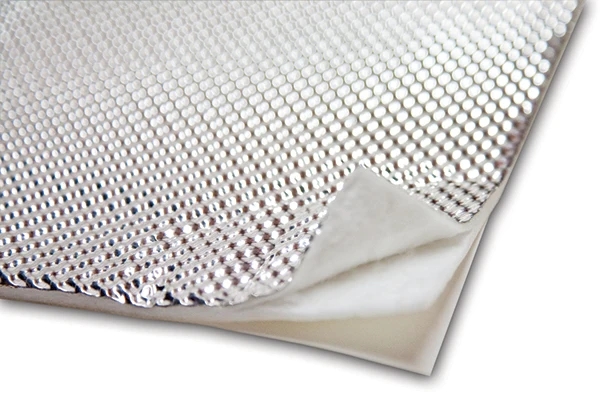
Uno scudo termico "peel and stick" combina normalmente tre elementi funzionali:
Questo design è diverso da uno scudo termico rigido in metallo stampato. Uno scudo rigido viene normalmente montato con staffe o elementi di fissaggio e può creare intenzionalmente un'intercapedine d'aria. Uno scudo termico con supporto adesivo viene fissato direttamente alla superficie protetta, rendendolo utile dove lo spazio di installazione è limitato o dove è richiesta una barriera leggera e adattabile.
È anche diverso dal nastro per scarichi o dall'isolamento per scarichi. Una barriera termica "peel and stick" viene generalmente installata sul componente che necessita di protezione da una fonte di calore vicina, piuttosto che avvolta direttamente attorno al tubo di scarico caldo.
Le applicazioni migliori sono le posizioni in cui il calore radiante raggiunge un pannello vicino, ma lo scudo stesso può essere incollato su una superficie idonea. Le tipiche posizioni automobilistiche includono le seguenti.
Una paratia parafiamma può ricevere un calore radiante significativo dai collettori di scarico, dai turbocompressori, dai tubi di scarico o dai componenti del motore. Uno scudo termico con supporto adesivo può essere applicato su un lato appropriato della paratia parafiamma per ridurre il calore radiante che raggiunge l'abitacolo o i componenti vicini.
Prima di specificare il materiale, determinare quale lato della paratia parafiamma riceverà lo scudo, la distanza dalla fonte di calore e la temperatura effettiva della superficie di montaggio.
I tubi di scarico, i convertitori catalitici e i componenti della trasmissione possono creare una zona termica concentrata attorno al tunnel di trasmissione. Uno scudo termico flessibile "peel and stick" può seguire la forma del tunnel più facilmente di alcuni materiali in fogli rigidi.
La parte inferiore di un veicolo, tuttavia, può anche essere soggetta ad acqua, detriti stradali, vibrazioni e flusso d'aria. La selezione dell'adesivo e la tenuta dei bordi diventano quindi particolarmente importanti in questa posizione.
I pianali posizionati sopra i sistemi di scarico, le marmitte, i convertitori catalitici o altri componenti caldi sono un'altra applicazione comune. L'obiettivo è normalmente limitare il trasferimento di calore verso l'abitacolo o proteggere i rivestimenti sensibili alla temperatura e i componenti interni.
Per le installazioni sottoscocca esposte, non selezionare uno scudo termico solo in base alla sua classificazione di temperatura. Verificare se l'adesivo, i bordi e lo strato riflettente esterno sono adatti all'esposizione meccanica e ambientale prevista.
I fogli riflettenti sottili con supporto adesivo sono utili laddove il calore radiante colpisce i pannelli sotto il cofano, le paratie, le scatole filtro, le aree di aspirazione o altre zone calde localizzate.
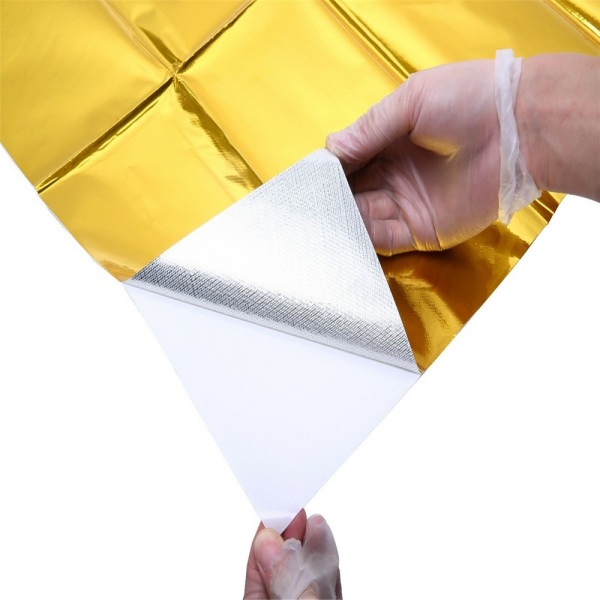
Per applicazioni in vani motore compatti in cui si preferisce una struttura riflettente sottile, BSTFLEX offre un foglio riflettente termico dorato con supporto adesivo. Il materiale utilizza una faccia dorata riflettente, rinforzo in fibra di vetro e adesivo sensibile alla pressione per l'installazione su superfici adeguatamente preparate.
Quando il percorso dello scarico passa vicino a un serbatoio del carburante, a una cella a combustibile o a un pannello della carrozzeria adiacente, è possibile installare una barriera termica adesiva sulla superficie protetta per ridurre l'esposizione al calore radiante.
Le applicazioni per il sistema di alimentazione richiedono particolare attenzione alla posizione di installazione, alla compatibilità dell'adesivo, all'esposizione ai fluidi e alla tenuta meccanica. Lo scudo termico non deve interferire con ispezioni, drenaggi, tubi del carburante, hardware di montaggio o accesso per la manutenzione.
Il calore radiante proveniente dai collettori di scarico, dai turbocompressori e da altri componenti del lato caldo può riscaldare le superfici vicine del sistema di aspirazione. Un foglio riflettente leggero può essere utilizzato su pannelli della scatola filtro idonei o barriere circostanti laddove l'obiettivo sia ridurre il carico di calore radiante.
La presenza di una superficie riflettente ad alta temperatura non rende una barriera con supporto adesivo adatta all'installazione diretta su ogni fonte di calore.
Uno scudo termico "peel and stick" non dovrebbe essere applicato automaticamente direttamente su un collettore di scarico, sull'alloggiamento di un turbocompressore, su un convertitore catalitico o su un tubo di scarico. Tali componenti possono creare temperature sostanzialmente diverse dalla temperatura misurata su un pannello della carrozzeria vicino.
Se l'obiettivo è isolare il componente di scarico stesso, consultare isolamento dello scudo termico di scarico, bende termiche per scarico o isolamento specifico per componenti invece di presumere che una barriera adesiva montata su pannello sia intercambiabile con l'isolamento diretto dello scarico.
Uno degli errori di specifica più comuni è guardare la capacità di temperatura della faccia riflettente o del substrato in fibra e presumere che l'adesivo abbia la stessa classificazione di temperatura.
Di solito non è così.
Un assemblaggio di scudo termico può contenere diversi materiali con limiti operativi differenti:
| Parte dello scudo termico | Cosa deve essere valutato |
|---|---|
| Faccia riflettente | Esposizione radiante, ossidazione, danni superficiali e orientamento verso la fonte di calore |
| Substrato in fibra di vetro o silice | Capacità di temperatura della fibra, spessore e integrità strutturale |
| Sistema di laminazione | Cicli di temperatura e stabilità del legame tra gli strati |
| Adesivo sensibile alla pressione | Temperatura effettiva della linea di incollaggio, compatibilità del substrato e adesione a lungo termine |
| Pannello protetto | Temperatura superficiale, condizioni del rivestimento, pulizia e ambiente meccanico |
La specifica che conta per l'adesivo è quindi la temperatura prevista sulla linea di incollaggio, non semplicemente la temperatura del tubo di scarico a diversi centimetri di distanza.
Prima di selezionare uno scudo termico con supporto adesivo, valutare le seguenti condizioni.
Determinare la temperatura massima continua e di picco della superficie a cui il materiale verrà effettivamente incollato. Non sostituire questo valore con la temperatura dei gas di scarico, la temperatura del collettore o la classificazione della faccia riflettente.
Se la temperatura prevista della superficie di montaggio è vicina o superiore al limite dell'adesivo, considerare di aumentare lo spazio libero, utilizzare una diversa costruzione dello scudo termico o aggiungere una ritenzione meccanica.
Gli adesivi sensibili alla pressione possono comportarsi in modo diverso su acciaio verniciato, alluminio nudo, acciaio inossidabile, compositi, plastiche e rivestimenti testurizzati. La condizione della superficie è importante tanto quanto il suo materiale.
Olio, residui di silicone, polvere, corrosione, umidità o vernice scrostata possono ridurre l'adesione anche quando l'adesivo stesso è tecnicamente adatto alla temperatura operativa.
Le superfici piatte o leggermente curve forniscono generalmente un'area di incollaggio continua più ampia. Pieghe nette, nervature profonde e curve composte possono creare stress all'interfaccia adesiva e aumentare il rischio di sollevamento dei bordi.
Per geometrie complicate, testare l'adattamento del materiale prima di rimuovere la pellicola protettiva. Parti tagliate su misura o fustellate possono fornire un'installazione più ripetibile rispetto al ritaglio di un grande foglio rettangolare durante l'assemblaggio.
Le applicazioni automobilistiche sono raramente statiche. Le vibrazioni del motore, l'input stradale e il movimento della trasmissione possono sollecitare i bordi di uno scudo termico adesivo nel corso di migliaia di cicli termici.
Nelle aree a forti vibrazioni, considerare angoli arrotondati, bordi anteriori protetti, sigillatura dei bordi o ulteriore ritenzione meccanica ove appropriato.
Un'installazione sotto il cofano e un'installazione esposta nel sottoscocca hanno ambienti di servizio molto diversi. Spruzzi stradali, nebbia d'olio, liquido refrigerante, contaminazione da carburante e prodotti chimici per la pulizia possono influire sull'incollaggio a lungo termine.
Quando si prevedono queste esposizioni, identificarle durante la selezione del materiale invece di trattare le prestazioni dell'adesivo come una specifica basata solo sulla temperatura.
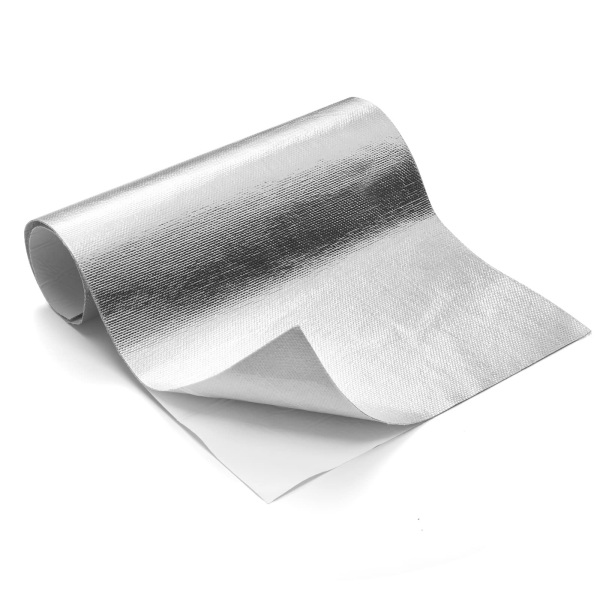
Il substrato è un'altra parte importante del processo di selezione.
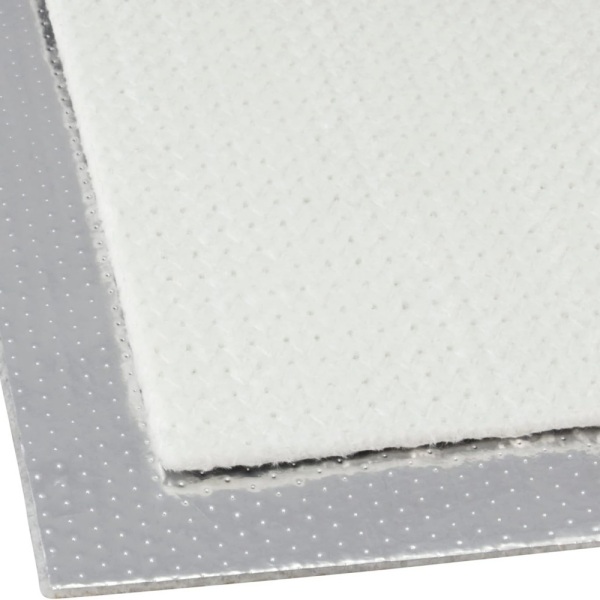
Per la schermatura dal calore radiante in ambito automobilistico e industriale generale, un tappetino termico in alluminio con retro adesivo fornisce una superficie riflettente in alluminio, uno strato in fibra di vetro e un retro autoadesivo.
Questo tipo di struttura può essere preso in considerazione per vani motore, pannelli di veicoli e altre posizioni in cui è richiesta un'installazione flessibile e tagliabile su misura.
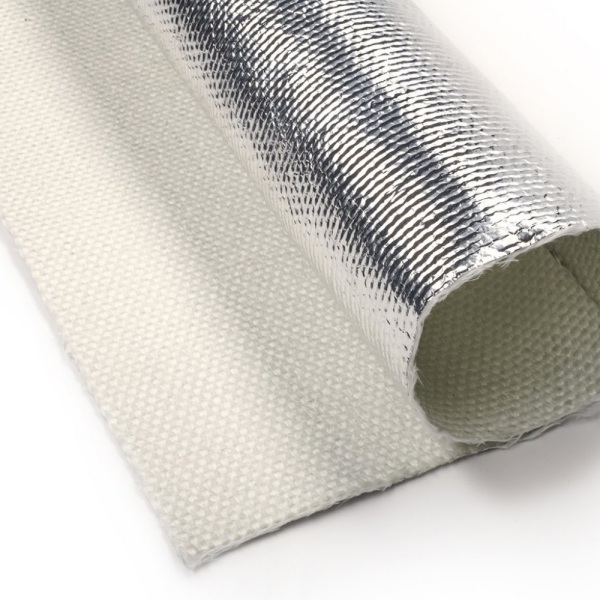
Laddove sia preferibile un substrato in silice, BSTFLEX fornisce uno schermo termico in silice e alluminio con retro adesivo. Il prodotto combina una superficie riflettente alluminizzata con silice intrecciata e una struttura con retro adesivo.
I prodotti in silice e fibra di vetro non dovrebbero essere selezionati esclusivamente in base al valore massimo di temperatura della fibra. L'intero assemblaggio installato, inclusi adesivo e struttura del laminato, deve rimanere idoneo per la temperatura di esercizio reale.
Laddove lo spazio sia limitato e sia desiderabile uno strato riflettente più sottile, un foglio riflettente termico color oro con retro adesivo può essere preso in considerazione per pannelli sottocofano, parafiamma, paratie e zone di calore radiante localizzato.
Questa struttura è diversa da un tappetino isolante più spesso in fibra di vetro o silice. La scelta del materiale dovrebbe quindi iniziare dall'applicazione piuttosto che dal solo aspetto.
Le barriere termiche riflettenti gestiscono principalmente il calore radiante e la geometria di installazione influisce notevolmente sulle loro prestazioni. In generale, una faccia riflettente funziona in modo più efficace quando è rivolta verso la fonte di calore e non è premuta direttamente contro tale fonte.
Lo spazio libero richiesto non può essere ridotto a un numero universale perché la temperatura della fonte di calore, il flusso d'aria, la struttura dello schermo, il tempo di esposizione e la temperatura del lato protetto sono tutti fattori importanti.
Per un progetto OEM o industriale, fornire la distanza minima disponibile tra il componente caldo e lo schermo termico in modo che l'installazione possa essere valutata come un sistema.
La perdita di adesione non è sempre causata da un adesivo difettoso. Le cause comuni includono:
Ecco perché la scelta dell'adesivo dovrebbe far parte delle specifiche dello scudo termico piuttosto che essere un ripensamento durante l'installazione.
| Fattore di selezione | Scudo termico adesivo | Scudo montato meccanicamente |
|---|---|---|
| Installazione | Adesivo sensibile alla pressione | Elementi di fissaggio, clip, staffe o distanziatori |
| Requisiti di spazio | Utile dove lo spazio di installazione è limitato | Può creare intenzionalmente un'intercapedine d'aria |
| Forme complesse | I materiali flessibili possono adattarsi a molti pannelli | Richiede una geometria formata o punti di montaggio progettati |
| Principale preoccupazione nella selezione | Temperatura dell'adesivo e condizioni della superficie | Geometria di montaggio, spazio libero e durata degli elementi di fissaggio |
Nessun design è universalmente migliore. La costruzione corretta dipende dallo spazio di ingombro, dal flusso termico, dalla temperatura, dalla superficie di installazione, dai requisiti di durata e dal metodo di produzione.
Per un progetto automobilistico, di attrezzature o industriale, fornisci qualcosa di più di una semplice richiesta per uno "scudo termico con adesivo ad alta temperatura". Una richiesta di offerta (RFQ) utile dovrebbe includere:
Per progetti personalizzati, BSTFLEX può esaminare il materiale in fogli, nonché i requisiti per le barriere termiche tagliate a misura e fustellate. Visita il nostro Gamma di barriere termiche e schermi termici per confrontare le costruzioni dei materiali disponibili.
Non automaticamente. La maggior parte delle barriere a pannello con retro adesivo è destinata a proteggere una superficie vicina piuttosto che a fungere da isolamento diretto per il tubo di scarico. Verificare la costruzione del prodotto e la temperatura della linea di incollaggio prima di qualsiasi applicazione a contatto diretto.
No. La faccia riflettente, il substrato in fibra, il laminato e l'adesivo sensibile alla pressione possono avere limiti di temperatura differenti. L'adesivo deve essere selezionato in base alla temperatura effettiva della superficie di montaggio.
Alcune costruzioni possono essere prese in considerazione per pianali e altri pannelli del sottoscocca, ma occorre valutare gli spruzzi stradali, lo sporco, le vibrazioni, il flusso d'aria, l'abrasione e i bordi esposti. Ambienti gravosi potrebbero richiedere una protezione dei bordi o un fissaggio meccanico.
Per le costruzioni di barriere termiche radianti riflettenti, la faccia riflettente è normalmente orientata verso la fonte di calore radiante. Verificare sempre i requisiti di installazione per lo specifico materiale.
Sì. Dimensioni personalizzate dei fogli, parti tagliate e componenti di barriere termiche fustellati possono essere esaminati in base a disegni, modelli e requisiti di produzione. La scelta del materiale, la costruzione dell'adesivo e il metodo di conversione vengono confermati per il singolo progetto.
Uno schermo termico adesivo dovrebbe essere selezionato come un assemblaggio termico completo piuttosto che per la sola comodità dell'adesivo. Inizia dalla fonte di calore e dalla geometria di installazione, determina la temperatura sulla superficie di montaggio, valuta l'ambiente e quindi scegli il materiale riflettente, il substrato termico e la costruzione dell'adesivo.
BSTFLEX fornisce tappetini termici in fibra di vetro e alluminio con retro adesivo, barriere termiche in silice e alluminio con retro adesivo, fogli riflettenti dorati per calore e altri materiali per barriere termiche automobilistiche.
Hai bisogno di aiuto per scegliere la costruzione? Invia la posizione di installazione, la temperatura della fonte di calore, la temperatura della superficie di montaggio, lo spazio libero, le dimensioni e la quantità richiesta tramite la nostra pagina di contatto per la revisione del materiale e il preventivo.

No.10, Chuangxin North Road, Nanshan Park, Ningguo Economic and Technological Development Zone, Ningguo City, Anhui Province, China
tel/Whatsapp : 0086-15856303740
e-mail : sales@bstbraidedsleeve.com
Skype : vanesa-cheng