Che cosa sta cercando?
An inquiry for an “Inconel heat shield” can describe several products that are not equivalent. One supplier may quote a flat Alloy 625 sheet. Another may provide an embossed facing ready for forming. A third may build a complete insulated panel with an Alloy 625 hot face, an insulation core and a separate backing layer.
All three may contain the same nickel alloy, but they differ in thickness, fabrication scope, heat-transfer behavior, installation space and price basis. Before comparing quotations, the buyer must establish exactly what is being purchased.
BSTFLEX supplies Alloy 625 Inconel heat shield material as barrier sheet, custom-cut patterns, formed panels and optional multi-layer constructions. The correct description depends on whether the project needs raw metal, a shaped radiant barrier or a complete insulated assembly.
| Supply Form | What the Buyer Receives | Primary Specification Focus |
|---|---|---|
| Alloy 625 foil or thin sheet | Flat nickel-alloy material for the customer to cut, form or assemble | Alloy, material condition, base-metal thickness, width, length and surface |
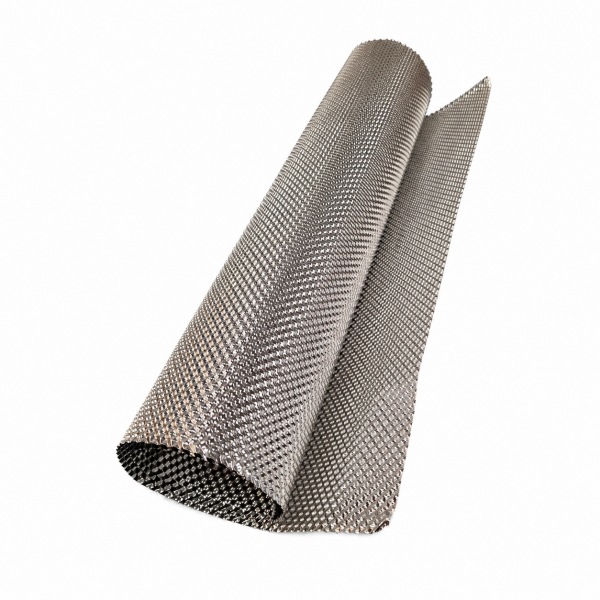
| Embossed Alloy 625 sheet | Patterned metal material with added three-dimensional geometry | Base gauge, pattern dimensions, orientation and forming compatibility |
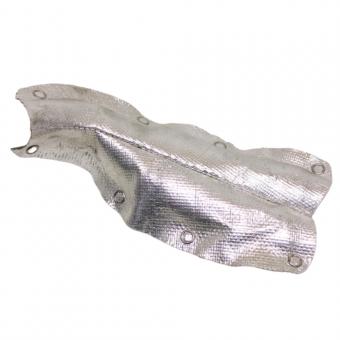
| Formed single-layer shield | A cut and shaped metal component with holes, tabs, flanges or finished edges | Finished geometry, mounting interfaces, clearance, tolerances and inspection |
| Insulated multi-layer panel | Alloy 625 facing combined with an insulation core and, where required, a backing layer | Complete layer stack, overall thickness, edge closure, attachment and thermal target |
These products should not be compared only by kilograms, sheet area or the words “Inconel 625.” The quotation must identify the delivery stage and the complete construction.
Inconel heat shield foil generally refers to thin Alloy 625 material used as the metallic part of a thermal barrier. Depending on the supplier and project, the same product may also be described as thin sheet, facing material, barrier sheet or nickel-alloy foil.
The word “foil” alone does not define an internationally uniform purchasing thickness for this application. A useful RFQ must state the base-metal gauge numerically and identify the applicable material specification and supply condition.
A bare Alloy 625 foil or sheet provides a durable metal surface that can be cut, embossed, bent or formed into a shield. It does not automatically include an insulation layer, backing, adhesive or mounting system.
This supply form is appropriate when the customer:
When ordering foil or sheet, ask whether the quoted dimensions refer to the full purchased panel, the usable patterned area or a finished blank.
An insulated panel is a complete layer construction rather than a single metal sheet. A typical project can combine an Alloy 625 facing on the hot side with a specified insulation core and an optional backing on the protected side.
Each layer has a different role. The Alloy 625 facing provides the exposed metal surface and helps the assembly tolerate demanding mechanical and environmental conditions. The insulation core adds thermal resistance. The backing can retain the core, protect it during handling or provide an interface for the mounting design.
The phrase “insulated Inconel heat shield” is incomplete unless the quotation also identifies:
Do not assume that the entire panel is made from Alloy 625 simply because the hot face uses that alloy.
| Design Consideration | Single-Layer Alloy 625 Foil or Sheet | Insulated Alloy 625 Panel |
|---|---|---|
| Construction | One metallic layer | Metal facing plus insulation and optional backing |
| Required Installation Space | Usually thinner, but performance depends strongly on position and air gap | Requires space for the full stack-up and edge construction |
| Fabrication | Suitable for cutting, embossing and forming according to the material condition | Requires layer assembly, retention and edge-finishing operations in addition to metal fabrication |
| Thermal Design | Functions mainly as a metal barrier within the installed geometry | Adds a defined insulation layer to the metal barrier |
| Inspection | Material identity, thickness, surface, profile and formed dimensions | All single-layer checks plus core, backing, total thickness, edge closure and assembly condition |
| Quotation Basis | Sheet, blank, weight or finished formed part | Complete assembly, normally quoted by finished panel or project configuration |
Neither construction is universally better. The correct choice depends on the protected component, available space, allowable shield temperature, mechanical requirements and the validation plan.
A single-layer metal shield normally depends on its position within the assembly. When the shield is separated from the hot component, the design can limit direct conduction and manage radiant heat across the gap.
An insulation core uses a different approach. It adds a low-conductivity layer between the hot-facing metal and the protected side of the assembly.
These methods can be used separately or together:
Placing bare metal directly against a hot surface creates a conductive heat path. Adding Alloy 625 does not remove that path. If direct contact is part of the design, the complete thermal construction must be evaluated accordingly.
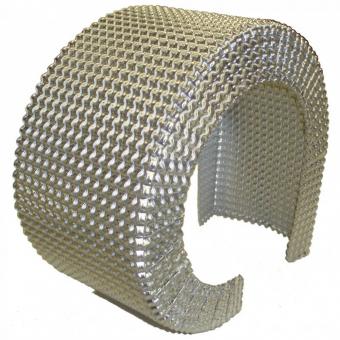
Embossing introduces a raised and recessed pattern into the metal. This can increase the stiffness of thin sheet and help it retain a designed shape. It does not convert the metal into a fibrous or cellular insulation layer.
An embossed single-layer shield may be the correct product where the project needs structural stability and a durable metal barrier. An insulated panel is the correct description only when a separate insulation layer is included.
For an embossed material inquiry, specify:
Keep the overall embossed height separate from the thickness of the Alloy 625 itself.
Alloy 625 material data applies to the alloy under defined conditions. It does not automatically establish the allowable temperature of the insulation, backing, seams, fasteners or complete heat shield assembly.
For a multi-layer panel, evaluate each element separately:
| Assembly Element | What Must Be Confirmed |
|---|---|
| Alloy 625 facing | Alloy specification, material condition, gauge and expected exposure |
| Insulation core | Material identity, thickness, density where controlled and installation limits |
| Backing | Material, thickness, protected-side environment and mechanical function |
| Edges and seams | Closure method, overlap, joining process and exposure to vibration or hot gases |
| Mounting system | Tabs, brackets, fasteners, contact areas and conductive heat paths |
A backing temperature reading does not establish the temperature of the hot-facing Alloy 625. Likewise, the temperature capability of the Alloy 625 does not prove that every other part of the panel can operate under the same condition.
Claims such as “reduces heat” or “lowers surface temperature” are incomplete without measurement locations and test conditions.
For a useful comparison, define:
If the construction changes from bare foil to an insulated panel, compare the two assemblies under the same installation conditions. Otherwise, the result may reflect different spacing, coverage or airflow rather than the layer construction alone.
A formed single-layer shield can be suitable when the design provides a controlled separation and the primary requirement is a durable metal barrier. A compact installation with strict protected-side temperature limits may require an insulated or multi-layer construction.
The decision depends on shield position. A body-mounted barrier and a close-fitting exhaust-mounted shield do not have the same thermal or mechanical requirements. Define whether the panel attaches to the hot component or to the vehicle structure.
Do not select the construction from the application label alone. Provide the duty cycle, available clearance, service access and failure mode that the new shield is intended to address.
Long operating periods, vibration, corrosion exposure and maintenance requirements can influence the choice between a thin formed barrier and a thicker insulated assembly. Include the environmental conditions in the RFQ.
For a broader review of available thermal-management formats, see the BSTFLEX exhaust heat shield insulation range.
These words are often used loosely. Define them in the purchasing document instead of assuming that every supplier uses the same terminology.
| Term | Recommended Purchasing Definition |
|---|---|
| Foil | Thin flat Alloy 625 material, with numerical base-metal thickness stated |
| Sheet | Flat or embossed material supplied in defined length and width |
| Blank | A cut flat profile prepared for a later forming or assembly operation |
| Formed shield | A three-dimensional single-layer metal component produced to a finished drawing |
| Insulated panel | A defined multi-layer assembly containing a metal facing, insulation and optional backing |
If the project uses its own terminology, add a section drawing. A simple cross-section can prevent a raw-sheet quotation from being compared with a complete insulated component.
Alloy 625 is available for welded fabrication, but “weldable” is not a complete finished-product specification. The joining process, filler material where applicable, joint geometry, forming history and inspection requirements must be defined for the project.
A supplier offering raw foil is not necessarily quoting welded seams or a fabricated enclosure. Where welding is included, state:
Do not convert a general alloy-property statement into approval for an unspecified production weld.
A raw Alloy 625 sheet and a finished insulated panel should not be compared by price per kilogram alone.
The complete cost can include:
Ask every supplier to identify included and excluded operations. A lower raw-material price can still produce a higher installed-part cost if the customer must complete several additional operations.
Keep the inspection plan linked to the approved drawing revision and sample. A visual similarity to a previous part is not a substitute for the specified construction.
| RFQ Field | Information to Provide |
|---|---|
| Supply form | Foil, flat sheet, embossed sheet, blank, formed shield or insulated panel |
| Material | Alloy 625 / UNS N06625 and applicable specification where required |
| Material condition | Required supply condition or customer-approved alternative |
| Base-metal thickness | Nominal gauge and tolerance for the Alloy 625 layer |
| Surface | Smooth, embossed or dimpled, with pattern details where controlled |
| Dimensions | Sheet size, blank profile or finished component drawing |
| Layer stack | Alloy 625 facing, insulation core, backing and layer orientation |
| Overall thickness | Finished assembly thickness and allowable local variation |
| Edges and seams | Deburred, folded, hemmed, closed or joined according to the drawing |
| Mounting features | Holes, slots, tabs, brackets and required clearances |
| Operating data | Heat source, temperatures, duration, cycling, airflow and environmental exposure |
| Performance target | Protected component and its allowable temperature or other agreed criteria |
| Quantity | Prototype quantity, normal batch size and estimated annual demand |
It is a metallic heat shield material, not a fibrous insulation core. Its performance depends on the complete shield geometry, surface condition, spacing and installation. A separate insulation layer is required when the design calls for an insulated panel.
No. Embossing changes the geometry of the metal sheet. A multi-layer heat shield contains two or more defined layers, such as a metal facing, insulation core and backing.
Yes, a project can specify Alloy 625 as the hot-facing layer with a different backing. The complete stack-up must be shown in the drawing, and every layer must be suitable for its own exposure and function.
There is no universal thickness for every heat shield. Select the gauge from the part geometry, forming process, mechanical loading, thermal duty and required service life. State the base-metal thickness separately from embossed height or total panel thickness.
It changes the thermal construction and can be useful where additional thermal resistance is required. It also adds thickness, assembly steps and edge-design requirements. The completed panel must be validated in the intended installation.
Yes. BSTFLEX supports custom-cut patterns, formed panels, embossed surfaces and multi-layer constructions based on project drawings, samples and application requirements.
BSTFLEX can review projects requiring bare Inconel 625 heat shield foil or sheet, embossed material, formed single-layer barriers or insulated multi-layer panels.
Send a section drawing whenever the assembly contains more than one layer. Include the Alloy 625 gauge, insulation and backing requirements, overall dimensions, mounting features, operating conditions and quantity.
Where Alloy 625 is not required for the application, alternative metal materials include embossed stainless steel heat shield material and embossed aluminum heat shield sheet. Material substitutions should be evaluated against the actual thermal and mechanical requirements.
Send your Alloy 625 heat shield drawing and RFQ to BSTFLEX for material, construction, prototype and production review.

No.10, Chuangxin North Road, Nanshan Park, Ningguo Economic and Technological Development Zone, Ningguo City, Anhui Province, China
tel/Whatsapp : 0086-15856303740
e-mail : sales@bstbraidedsleeve.com
Skype : vanesa-cheng