Che cosa sta cercando?
All'interno di una marmitta ad assorbimento, il nucleo perforato rappresenta solo una parte del sistema acustico. Il materiale che circonda tale nucleo influenza direttamente il rumore di scarico, la qualità del suono, la stabilità termica, la durata dell'imbottitura e le condizioni a lungo termine della marmitta.
Quel materiale è generalmente noto comeimbottitura della marmitta.
A seconda del design dello scarico e del mercato, lo stesso componente può anche essere descritto comemateriale di riempimento della marmitta,imballaggio del silenziatore di scarico, materiale fonoassorbente per silenziatori, materiale fonoassorbente per scarichi, materiale di riempimento acustico, lana fonoassorbente per silenziatori o materiale smorzante per scarichi.
BSTFLEX fornisce e sviluppa materiali di riempimento ad alta temperatura per silenziatori per motociclette, sistemi di scarico per autoveicoli, silenziatori da competizione, silenziatori industriali, generatori e altri gruppi di scarico.
Esplora la gamma completa dimateriali di riempimento per marmitte.
Un tipico silenziatore ad assorbimento è costruito attorno a una configurazione relativamente semplice:
Flusso dei gas di scarico → tubo perforato → strato protettivo in fibra → imbottitura acustica → involucro esterno
I gas di scarico attraversano il nucleo perforato. L'energia acustica passa attraverso le perforazioni e penetra nel materiale fibroso circostante.
Anziché affidarsi esclusivamente a camere o deflettori restrittivi, l'imbottitura converte parte di questa energia acustica in piccolissime quantità di calore attraverso l'attrito all'interno della struttura delle fibre.
Affinché il sistema continui a funzionare, l'imballaggio deve rimanere:
termicamente stabile,
sufficientemente resiliente,
resistente all'erosione da impulsi di scarico,
correttamente imballato attorno al nucleo,
e in grado di mantenere la propria struttura fibrosa anche dopo ripetuti cicli di riscaldamento e raffreddamento.
Ecco perché la scelta del materiale fonoassorbente per la marmitta di scarico basata unicamente sulla temperatura di esercizio è raramente sufficiente.
L'imbottitura della marmitta svolge diverse funzioni contemporaneamente.
La struttura a fibre aperte assorbe l'energia sonora generata dagli impulsi di scarico. Ciò è particolarmente importante nei silenziatori a flusso diretto e ad alte prestazioni, dove il flusso dei gas passa attraverso un tubo centrale perforato.
Le condizioni di imballaggio possono influenzare non solo la pressione sonora, ma anche il tono dello scarico.
Un materiale fonoassorbente nuovo generalmente produce un suono di scarico più controllato e meno metallico. Quando le fibre si deteriorano, si comprimono, migrano o scompaiono, il silenziatore può diventare sensibilmente più acuto e rumoroso.
Lo strato di riempimento crea una separazione tra il tubo perforato caldo e l'involucro della marmitta.
Sebbene il materiale fonoassorbente della marmitta sia principalmente un materiale acustico, le sue caratteristiche termiche influenzano la temperatura dell'involucro e la durata dei componenti adiacenti.
Un imballaggio stabile riduce il carico acustico e termico diretto sul guscio esterno. Un sistema di imballaggio ben progettato può anche ridurre il deterioramento dovuto alle vibrazioni all'interno della marmitta.
Non esiste un unico materiale fonoassorbente per silenziatori che sia ideale per ogni sistema di scarico.
Temperatura, velocità dei gas, tipo di motore, intervallo di manutenzione previsto, livello sonoro desiderato, geometria del silenziatore e metodo di produzione sono tutti fattori che influenzano la scelta del materiale.
La fibra di vetro rimane uno dei materiali più utilizzati nei silenziatori ad assorbimento.
Combinando una bassa densità apparente con un'ampia superficie delle fibre, offre un buon assorbimento acustico senza aggiungere peso eccessivo.
Le forme tipiche includono:
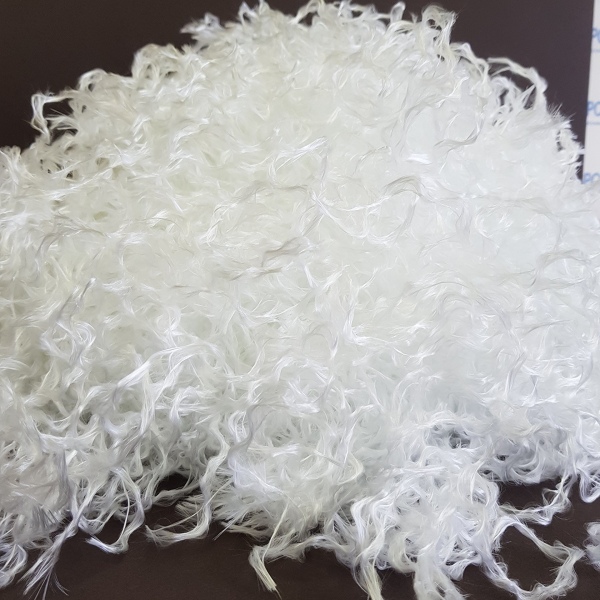
filato di fibra di vetro sfuso,
fibra di vetro a filamento continuo,
fibra di vetro testurizzata,
tappeti in fibra di vetro,
cuscini da imballaggio in fibra di vetro,
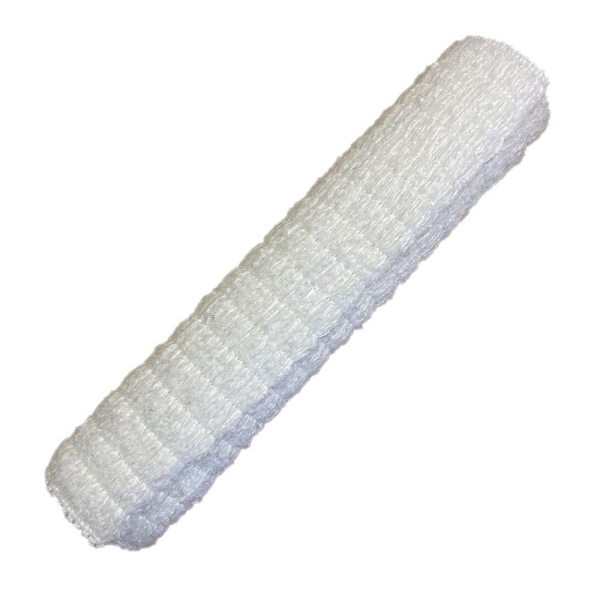
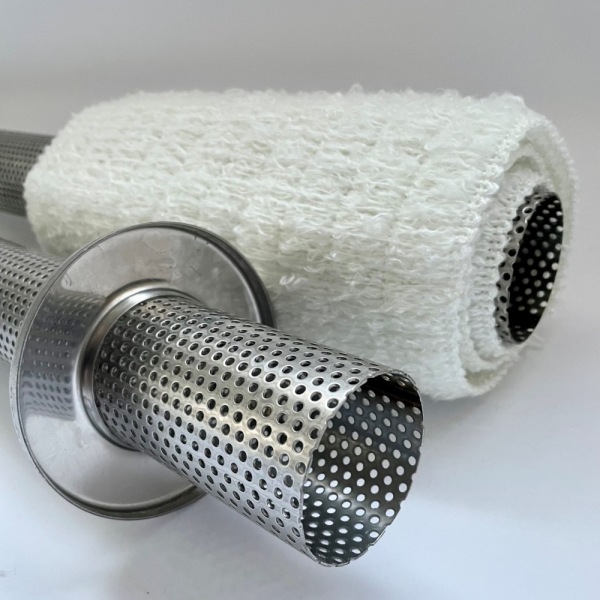
Calze da imballaggio preformate,
e fibra di vetro contenuta all'interno di sacchi di rete di vetro intrecciata.
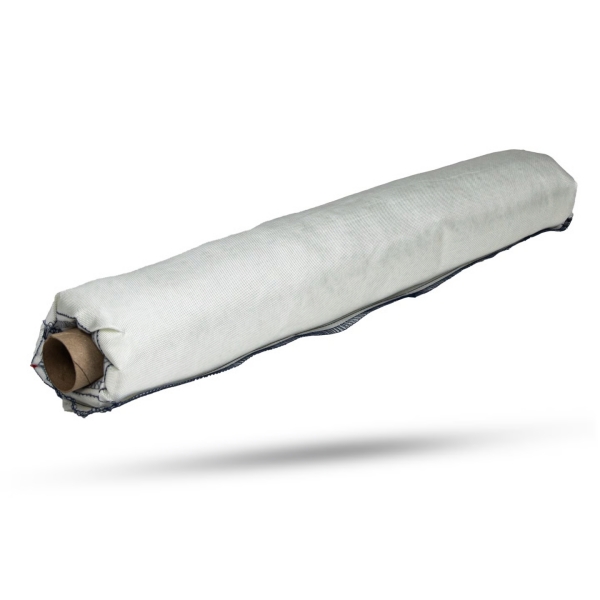
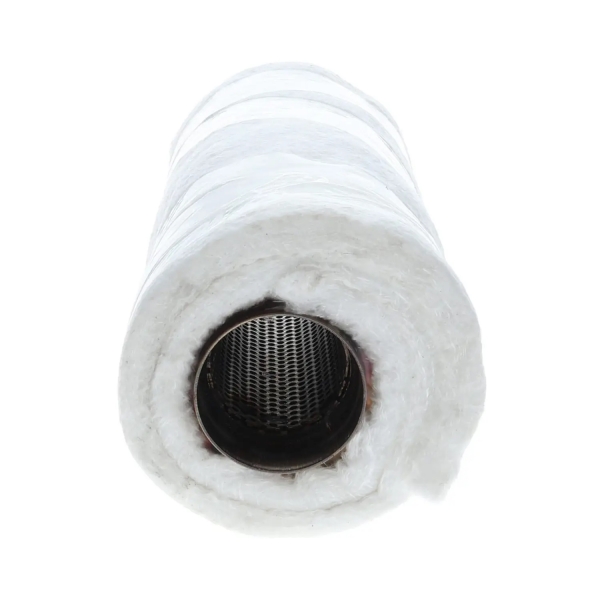
BSTFLEX produce unCalza di imballaggio per marmitta in fibra di vetro con sacchetto in rete di vetro intrecciataper applicazioni in cui l'installazione controllata e la ritenzione delle fibre sono preferibili all'imballaggio sfuso.
L'imballaggio in fibra di vetro viene comunemente scelto per:
marmitte per motociclette,
Silenziatori per ATV e UTV,
scarichi ad alte prestazioni per autoveicoli,
silenziatori di ricambio,
sistemi di scarico da competizione,
e molti silenziatori ad assorbimento originali.
Il suo principale vantaggio risiede nell'equilibrio tra efficienza acustica, peso, facilità di produzione e costo.
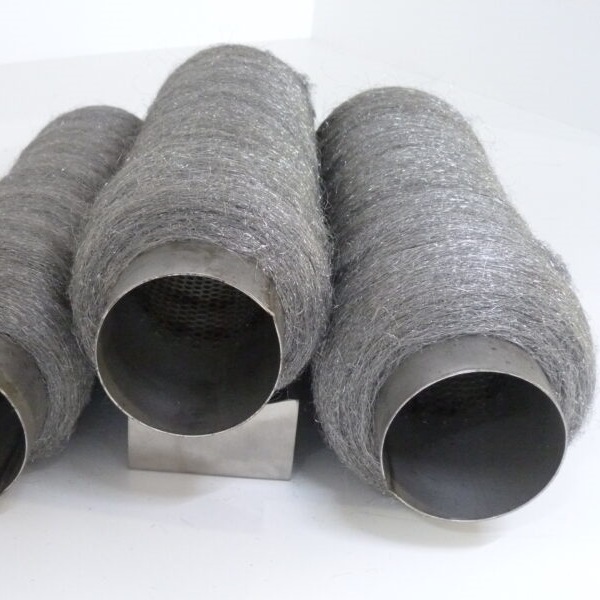
La lana d'acciaio inossidabile svolge una funzione leggermente diversa.
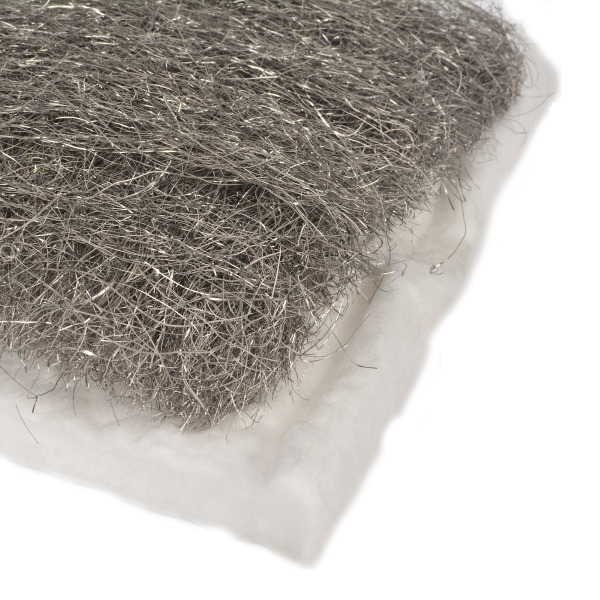
Può essere utilizzato come materiale di riempimento, ma in molti sistemi di scarico ad alte prestazioni viene installato direttamente attorno al tubo perforato come strato protettivo.
La disposizione tipica è la seguente:
Nucleo perforato → lana d'acciaio inossidabile → imbottitura in fibra di vetro → involucro del silenziatore
Lo strato di acciaio inossidabile contribuisce a proteggere le fibre acustiche più morbide da:
gas di scarico molto caldi,
impulsi ad alta velocità,
turbolenza attorno alle perforazioni,
esposizione alla fiamma,
e rottura progressiva delle fibre.
Questa soluzione costruttiva è particolarmente utile negli impianti di scarico per motociclette, veicoli da corsa, motori turbocompressi e ad alte prestazioni, che richiedono elevate prestazioni.
Per questo motivo, paragonare la lana di vetro e la lana d'acciaio inossidabile come se si potesse utilizzare un solo materiale può talvolta essere fuorviante. In molti silenziatori, infatti, svolgono funzioni complementari.
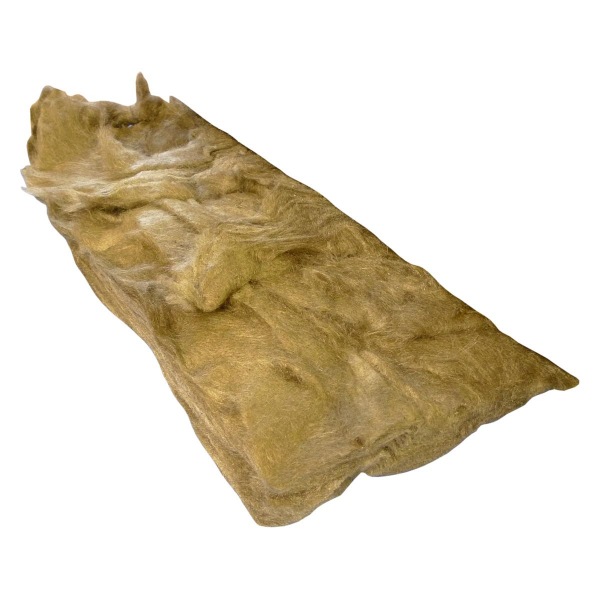
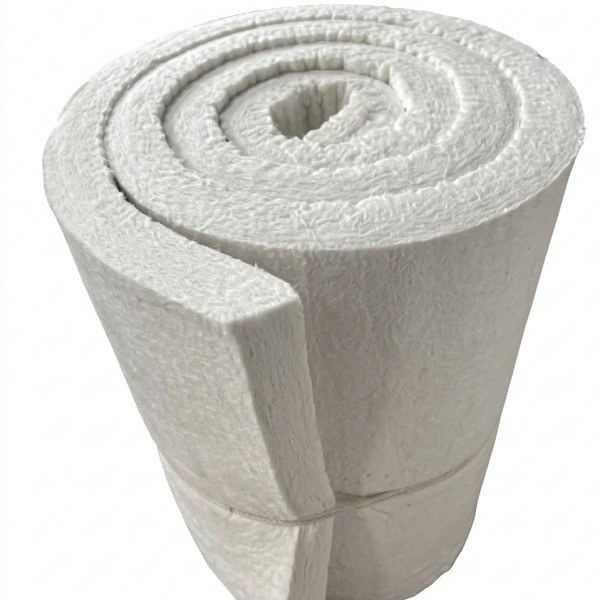
Nei casi in cui le temperature dei gas di scarico siano insolitamente elevate, si può prendere in considerazione l'utilizzo di fibre ceramiche.
L'imbottitura per silenziatori in fibra ceramica è interessante per la sua capacità di resistere alle alte temperature e per la sua conduttività termica relativamente bassa.
Le possibili applicazioni includono:
high-temperature industrial silencers,
heavy-duty engine exhaust systems,
certain generator exhaust assemblies,
thermal-intensive exhaust equipment,
and special mufflers operating beyond the practical range of conventional glass fiber.
However, the highest temperature material is not automatically the best acoustic material.
Density, fiber diameter, resilience, vibration resistance, handling requirements, and long-term fiber stability must also be evaluated.
Basalt fiber provides another option between conventional glass fiber and more specialized high-temperature materials.
Produced from volcanic basalt rock, continuous basalt fibers can provide:
good thermal resistance,
mechanical stability,
chemical resistance,
vibration resistance,
and useful acoustic performance.
Basalt muffler packing can therefore be considered for automotive, motorcycle, heavy-duty, or industrial exhaust systems where designers want a mineral-fiber solution with elevated thermal capability.
| Packing Material | Primary Strength | Typical Position | Suitable Applications |
|---|---|---|---|
| Fiberglass | Efficient acoustic absorption | Main packing layer | Motorcycle, automotive, performance exhaust |
| Stainless Steel Wool | Heat and erosion protection | Around perforated core or as metallic packing | Racing, turbo, high gas velocity exhaust |
| Ceramic Fiber | Extreme-temperature capability | Main or supplementary insulation layer | Industrial and severe-temperature silencers |
| Basalt Fiber | Thermal and mechanical durability | Main acoustic packing layer | Heavy-duty, automotive and industrial exhaust |
The correct construction may combine two or more materials rather than using a single fiber throughout the silencer.
Two mufflers using exactly the same fiber can perform differently simply because the material was installed at different densities.
This is one of the most overlooked aspects of exhaust muffler packing.
If the fiber mass is insufficient, several problems can develop:
reduced acoustic absorption,
rapid fiber movement,
localized empty areas,
increased exhaust noise,
accelerated blowout.
The fibers may also redistribute under vibration and exhaust pulsation.
Over-compression creates another set of problems.
When fibrous material is compressed excessively, the void structure needed for acoustic energy dissipation changes.
The result can be:
poorer sound absorption in certain frequency ranges,
increased silencer weight,
difficult assembly,
reduced fiber resilience,
and unnecessary material consumption.
The goal is therefore not to put the maximum possible amount of packing inside the muffler.
The objective is to achieve a controlled and repeatable packing density suitable for the muffler geometry and target acoustic performance.
Muffler packing works in one of the harshest environments on a vehicle.
The material may experience thousands of heating and cooling cycles together with vibration and rapidly fluctuating exhaust pressure.
Several deterioration mechanisms can occur.
High-velocity exhaust gases passing through perforations gradually attack exposed fibers.
This is often called fiber blowout.
Continuous exposure to elevated temperature can reduce fiber resilience and alter the packing structure.
Vibration can cause loose packing to migrate or compact.
The silencer may develop areas with insufficient material even when the total amount of packing originally installed was correct.
Condensation, oil residue, incomplete combustion products, and other deposits can affect the condition of the acoustic fibers.
A theoretically suitable material may still fail prematurely if it is packed unevenly or installed at the wrong density.
Muffler packing deterioration is not always visible from outside the silencer.
Several operating changes can indicate that the material should be inspected.
Common signs include:
A noticeable increase in exhaust volume
The muffler gradually becomes louder because the effective acoustic mass has decreased.
A sharper or metallic exhaust note
When the packing layer becomes thin, sound energy interacts more directly with the metal shell.
Fibers coming from the tailpipe
Visible strands or particles at the outlet may indicate packing migration or blowout.
Hot spots on the muffler casing
Loss or movement of the internal packing can create uneven thermal distribution.
Rattling or internal movement
This can indicate loose material or deterioration of internal components.
Motorcycle silencers place especially high demands on packing material because the available volume is limited while exhaust temperatures and pulse velocity can be high.
For this reason, motorcycle exhaust packing normally needs to combine:
strong acoustic absorption,
low weight,
good thermal stability,
resistance to vibration,
easy repacking,
and controlled fiber retention.
Both two-stroke and four-stroke engines use packed silencers, but their operating environments differ considerably.
Two-stroke exhaust packing can be affected heavily by oil, combustion residue, and frequent repacking cycles.
Four-stroke performance exhausts may expose the material to higher sustained temperatures and aggressive exhaust pulses.
Selecting packing purely by motorcycle type is therefore insufficient. Muffler construction and engine operating conditions should also be considered.
Performance exhaust manufacturers often need to reduce sound without introducing excessive backpressure.
Straight-through absorption mufflers are useful in this situation because the exhaust path remains relatively open.
The acoustic packing surrounding the perforated core becomes a critical component.
Depending on the application, manufacturers may specify:
continuous fiberglass packing,
stainless steel wool core protection,
composite stainless/fiberglass systems,
basalt fiber,
or specialized high-temperature fibers.
For racing exhaust systems, packing retention becomes particularly important because high gas velocities can rapidly damage exposed loose fibers.
Industrial silencers operate under a different set of requirements.
Applications can include:
diesel generators,
gas engines,
compressors,
turbines,
exhaust treatment equipment,
heavy machinery,
power generation systems,
and industrial ventilation or acoustic control systems.
In these installations, designers may prioritize:
continuous operating temperature,
acoustic absorption over a specified frequency range,
long maintenance intervals,
fiber stability,
corrosion resistance,
and repeatable packing density.
Industrial buyers therefore often purchase muffler packing by engineering specification rather than simply selecting a consumer repacking kit.
Manufacturers normally have several ways to introduce fiber into a silencer.
Loose fibers or strands allow considerable flexibility during assembly.
They work well where the muffler geometry varies or packing is performed manually.
The challenge is maintaining consistent density from one muffler to another.
Mats provide more predictable thickness and make material handling easier during production.
They are especially suitable when the silencer has a regular cylindrical geometry.
A measured amount of fiber is enclosed inside a lightweight retaining fabric or mesh.
This allows manufacturers to control fiber mass before installation.
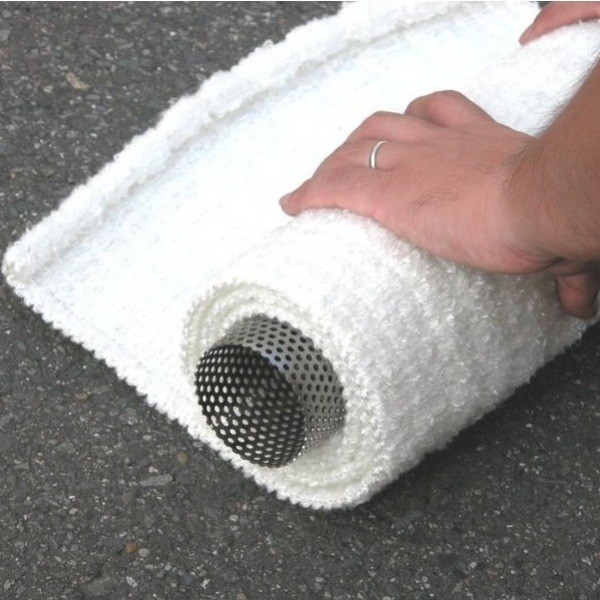
A tubular packing assembly can be fitted around the perforated core, reducing installation time and helping maintain circumferential coverage.
BSTFLEX develops customized packing formats including fiberglass-based assemblies for OEM exhaust production.
A purchase specification should contain more information than simply:
“Fiberglass muffler packing.”
For repeatable production, buyers should consider supplying:
| Specification Item | Why It Matters |
|---|---|
| Fiber material | Determines thermal and mechanical behavior |
| Silencer internal diameter | Defines available packing space |
| Perforated core diameter | Determines required packing thickness |
| Muffler length | Determines fiber quantity |
| Target packing density | Influences acoustic performance |
| Continuous exhaust temperature | Determines material suitability |
| Peak temperature | Identifies short-duration thermal exposure |
| Engine type | Helps evaluate exhaust environment |
| Packing format | Loose fiber, mat, pillow, sock or custom assembly |
| Annual quantity | Determines manufacturing and packaging method |
When these parameters are available, the packing can be engineered around the silencer rather than supplied as a generic bulk fiber.
Manual loose packing creates several variables.
One operator may install more material than another. Distribution around the perforated tube may also vary.
Preformed systems reduce this variability.
A packing sock, bag, pillow, or measured mat can provide:
defined material weight,
more uniform circumferential distribution,
reduced fiber handling,
shorter assembly time,
cleaner production,
improved batch repeatability.
For medium- and high-volume exhaust manufacturing, those manufacturing benefits can be as important as the thermal properties of the fiber itself.
A practical starting point is to identify the dominant failure risk.
Consider fiberglass as the primary acoustic layer.
Consider a stainless steel wool or metallic mesh protection layer before the main fiber packing.
Evaluate ceramic or other elevated-temperature fibers.
Consider materials and packing forms with stronger dimensional stability and controlled retention.
Consider preformed socks, pillows, mats, or custom packing assemblies rather than uncontrolled loose fill.
BSTFLEX manufactures high-temperature thermal and acoustic materials for exhaust systems and can support both replacement packing and OEM silencer production.
Available development options can include:
fiberglass muffler packing,
glass fiber silencer packing,
stainless steel wool packing,
ceramic fiber packing,
basalt-based packing,
loose fiber,
mats,
rolls,
packing bags,
packing pillows,
tubular packing socks,
and customized preformed assemblies.
Sizes, packing weight, fiber combination, retaining construction, and packaging can be developed according to customer drawings, samples, or silencer dimensions.
For applications requiring easier assembly and improved fiber containment, see theFiberglass Muffler Packing Sock with Woven Glass Mesh Bag.
For additional material options, visit theBSTFLEX Muffler Packing category.
There is no universal best material. Fiberglass is widely used because of its acoustic efficiency and weight, stainless steel wool is effective for protecting packing near the perforated core, while ceramic and basalt fibers may be selected where higher temperature capability is required.
Yes. Fiberglass is one of the most common acoustic materials used in absorption-type exhaust silencers because its fibrous structure provides efficient sound absorption while remaining relatively lightweight.
It can be used alone in some designs, but stainless steel wool and fiberglass often perform different functions. Stainless steel wool can protect the inner packing from exhaust erosion, while fiberglass provides the principal acoustic absorption layer.
Packing can escape because of fiber erosion, excessive gas velocity, damaged retaining mesh, incorrect packing density, thermal degradation, or deterioration around the perforated core.
Not necessarily. Excessive compression can reduce the open fiber structure needed for effective acoustic absorption. Packing density should be controlled rather than maximized.
There is no fixed interval for every exhaust system. Replacement frequency depends on exhaust temperature, engine type, riding conditions, packing material, gas velocity, silencer design, and operating hours.
Sì. L'imballaggio OEM può essere fornito in base al diametro del nucleo, al diametro del guscio, alla lunghezza del silenziatore, al peso di imballaggio desiderato, alle specifiche del materiale, ai requisiti di temperatura e al formato di installazione preferito.
Nella progettazione degli impianti di scarico, l'attenzione si concentra spesso principalmente sulla parte esterna del silenziatore, ma il materiale nascosto tra quest'ultima e il nucleo perforato determina in modo significativo il comportamento acustico del silenziatore stesso.
Un progettato correttamentemateriale di riempimento della marmittanon dovrebbe semplicemente resistere al calore.
Deve mantenere il giusto rapporto tra struttura delle fibre, densità, assorbimento acustico, resistenza all'erosione e uniformità di installazione.
Per i silenziatori standard di motociclette e automobili, la fibra di vetro rimane una delle scelte più versatili. Per ambienti di scarico più impegnativi, la lana d'acciaio inossidabile, la fibra ceramica, la fibra di basalto o combinazioni multistrato possono prolungarne la durata.
Per i produttori di sistemi di scarico OEM, il passo successivo non è semplicemente la scelta di una fibra.
Sta definendo il correttosistema di riempimento del silenziatore di scaricoper la geometria del silenziatore, la temperatura dei gas di scarico, l'obiettivo acustico e il metodo di produzione.
BSTFLEX è in grado di produrre e personalizzare materiali fonoassorbenti per silenziatori destinati a sistemi di scarico per motociclette, automobili, auto da corsa, generatori, imbarcazioni e impianti industriali.
Contatta BSTFLEX fornendo le dimensioni del silenziatore, la temperatura di esercizio, il formato di imballaggio richiesto e il volume annuo di produzione per la selezione del materiale e la realizzazione di un campione.

No.10, Chuangxin North Road, Nanshan Park, Ningguo Economic and Technological Development Zone, Ningguo City, Anhui Province, China
tel/Whatsapp : 0086-15856303740
e-mail : sales@bstbraidedsleeve.com
Skype : vanesa-cheng